Video mapSeoul4 spots
XL Journal in Seoul: 4 Spots From the Video
4 spots in Seoul, mapped from 10 Best Cafes in Seoul | Korea by XL Journal.
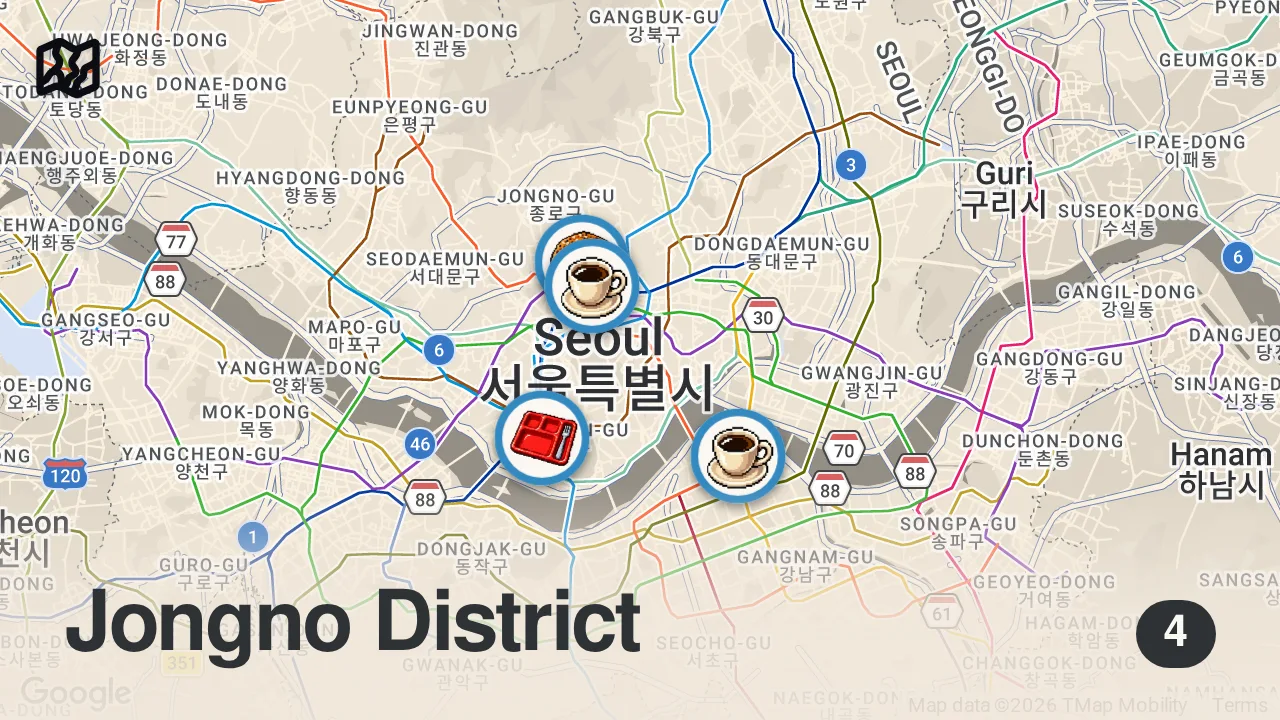
The 4 spots

London Bagel Museum Anguk
- London Bagel Museum AngukKnown for: K-Style Salt Bread (Sogeum-ppang). Mentioned as a must-try spot in top foods.
Try: K-Style Salt Bread (Sogeum-ppang)
20 Bukchon-ro 4-gil, Jongno District, Seoul, South Korea

Soha Salt Pond Ikseon-dong
21-5 Supyo-ro 28-gil, Jongno District, Seoul, South Korea
Mooni Apgujeong
16 Apgujeong-ro 56-gil, Gangnam District, Seoul, South Korea

Teddy Beurre House
South Korea, Seoul, Yongsan District, Hangang-daero 40ga-gil, 42 1층
From the video
 10 Best Cafes in Seoul | Korea · XL Journal
Researched by Varedelo
Planning notes for Seoul
 Must-try foods in Seoul
- Myeongdong Kalguksu (Knife-Cut Noodles)A comforting bowl of handmade, wheat-flour noodles served in a rich, velvety chicken broth. The most iconic version is found at Myeongdong Kyoja, where the noodles are topped with minced meat and accompanied by their legendary, intensely garlicky kimchi. It remains a mandatory stop for both locals and travelers in 2026.
- Ganjang Gejang (Soy-Marinated Raw Crab)Often called the 'Rice Thief' because the salty, umami-rich sauce compels you to eat endless bowls of rice. Fresh raw crabs are marinated in a secret soy sauce blend. The true local way to eat it is by mixing rice directly into the crab shell to soak up the creamy roe and tomalley. Jinmi Sikdang is the premier destination for this delicacy.
- Hanwoo Beef (Korean Native Cattle)Korea’s answer to Wagyu, Hanwoo is prized for its perfect balance of marbling and deep beefy flavor. For an authentic experience, head to the Majang Meat Market where you can select your cuts and have them grilled immediately. In 2026, high-end 'Hanwoo Omakase' spots like Hanmiok are trending for their creative, multi-course beef presentations.
- Yukhoe Tangtangi (Beef Tartare with Live Octopus)An adventurous and iconic dish from Gwangjang Market. It features seasoned raw beef (yukhoe) topped with freshly chopped long-arm octopus (sannakji) that is still moving. The combination of the tender beef and chewy, suctioning octopus, seasoned with sesame oil and salt, provides a unique texture and flavor profile that defines Seoul's market culture.
- Spicy Rice Cakes (Tteokbokki)The ultimate street food. Chewy, cylindrical rice cakes are simmered in a thick, sweet, and spicy gochujang sauce. While available on every corner, the 'Sindang-dong Tteokbokki Town' offers a specialized version called 'Jeukseok Tteokbokki' (on-the-spot), which is cooked at your table with ramen noodles, dumplings, and eggs.
- Samgyetang (Ginseng Chicken Soup)A whole young chicken stuffed with glutinous rice, ginseng, jujube, and garlic, simmered into a milky, medicinal broth. Traditionally eaten on the hottest days of summer to replenish energy, it is a year-round staple. 3rd Generation Samgyetang Jin in Seocho is a 2026 Michelin-recognized favorite for its deep, 50-year-old recipe.
Trip guide
- About SeoulSeoul is a city with a documented history spanning over 2,000 years, established as a capital in 18 BCE by the Baekje Kingdom and later designated the capital of the Joseon Dynasty in 1394. The city's historical heritage is centered on its five royal palaces—Gyeongbokgung, Changdeokgung, Deoksugung, Changgyeonggung, and Gyeonghuigung—constructed during the Joseon period.
- When to goThe best times to visit Seoul are during the spring (April to June) for cherry blossoms and autumn (September to November) for vibrant fall foliage and mild, clear skies. You should avoid the humid monsoon season in July and August, as well as the freezing winter months of January and February when temperatures often drop below zero. Peak tourist seasons coincide with these pleasant shoulder months.
- Getting around Seoul
- International Flight to Incheon (ICN) Most travelers arrive via Incheon International Airport, which is connected to central Seoul by the AREX express train, limousine buses, or taxis taking approximately 45 to 60 minutes.
- Seoul Metropolitan Subway The extensive subway system is the most efficient way to travel locally, featuring color-coded lines and English signage; payment is easily managed using a rechargeable T-money card.
- Public Bus System Seoul's color-coded bus network (Blue, Green, Red, Yellow) covers areas not reached by trains and uses the same T-money payment system with free transfers between modes within certain time limits.
- Local tips
- Purchase a T-money or Climate Card for seamless public transport, as most buses and subways do not accept cash.
- Avoid tipping at restaurants and cafes, as it is not customary and can sometimes be perceived as awkward or rude.
- Use both hands when giving or receiving items like money, credit cards, or drinks to show respect.
- What’s new in Seoul
- Centre Pompidou Hanwha Seoul: A major new art landmark opening in June 2026 inside the 63 Building, featuring modern and contemporary masterpieces from the Paris collection.
- Seongsu-dong Pop-up Culture: The 'Brooklyn of Seoul' continues to trend with high-concept flagship stores like HAUS NOWHERE and weekly viral fashion and K-pop pop-up events.
 Visit SeoulVisit SeoulThe official travel guide to Seoul, operated by the Seoul Tourism Organization, providing information on attractions, food, and festivals.
Planning questions
Where did XL Journal eat in Seoul?
This guide maps all 4 spots featured in the video, with names, addresses, and neighborhoods, so you can plan where to eat in Seoul.
Can I save these spots to use on my trip?
Yes. Open the map in Varedelo to save every spot, get directions, and revisit the guide from your phone while you travel.