
Travel video guide
Chad and Claire in Tokyo: 4 Spots From the Video
This guide turns Japanese Food Tour in Tokyo, Japan: Ultimate Guide 🇯🇵 from Chad and Claire into a practical food map with 4 saved spots around Chuo City, Shibuya, and Shinjuku City. The mapped places include a tourist attraction, a convenience store, and a market. Use it to understand the places, dishes, and trip context before saving the map in Varedelo.
What the creator captured
Chad and Claire were deeply impressed by the extreme efficiency, silence, and politeness of Japanese society, comparing the atmosphere to Nordic countries. A major highlight was their visit to a waterside restaurant where Claire tried sea urchin for the first time and declared the meal the best sushi experience of her life. Despite receiving a 'bad luck' fortune at Senso-ji Temple, they were captivated by the historical beauty and cultural depth of Tokyo.
What this map is good for
- Planning a tourist attraction stop or short itinerary in Chuo City.
- Comparing food stops from a creator or saved local map before you commit time in the city.
- Saving 4 mapped spots into Varedelo so the list stays usable on the ground.
- Using the original video as context, then turning it into a clean place-by-place map.
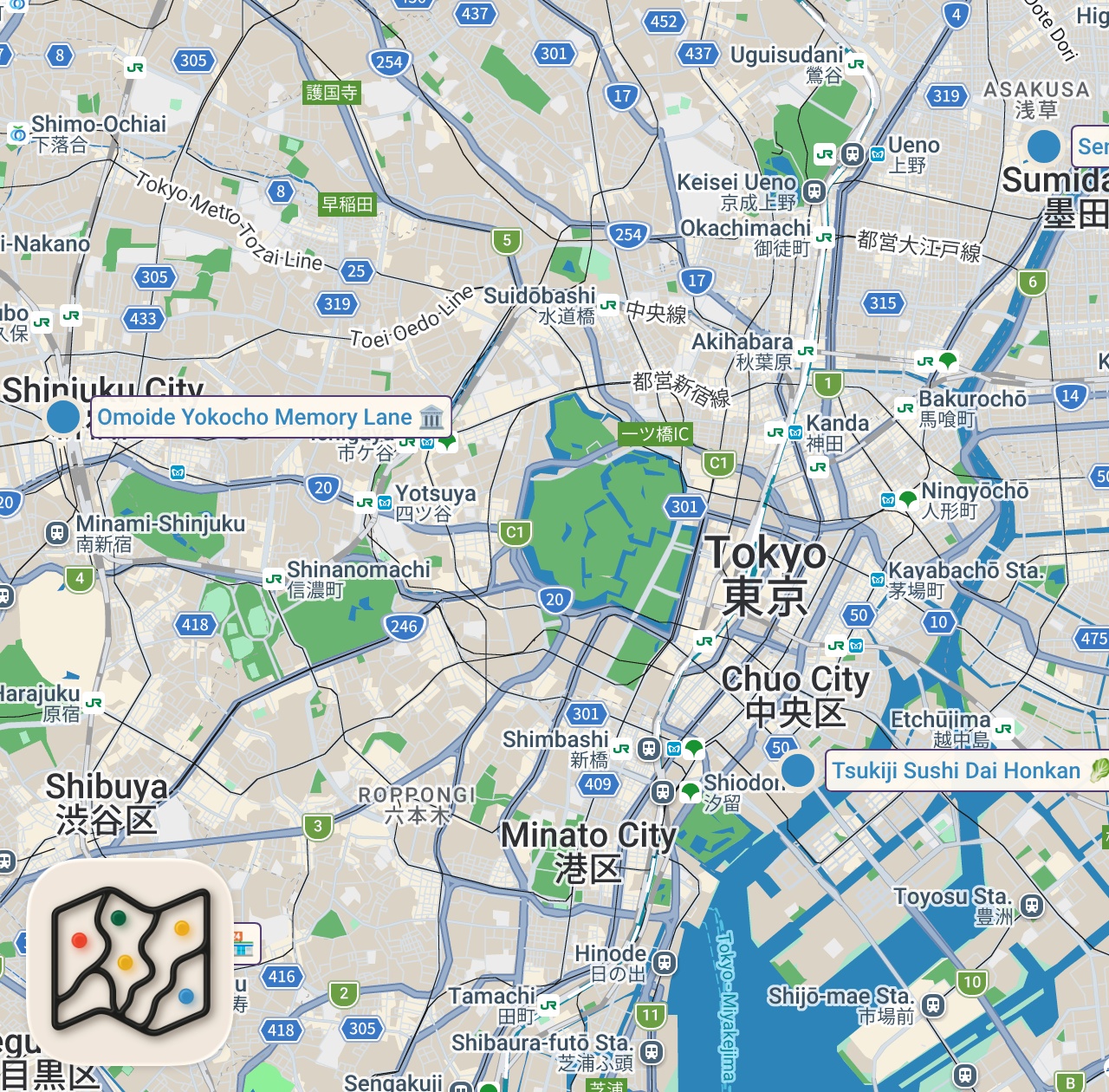
Featured spots on this map
- Sensō-ji
Tourist Attraction in 2-chōme-3-1 Asakusa, Taito City, Tokyo 111-0032, Japan, 3, Taito City, Tokyo, Japan - 7-Eleven
Convenience Store in 14-23 Daikanyamachō, Shibuya, Tokyo 150-0034, Japan, 14, Shibuya, Tokyo, Japan
Hours: Hours available - Tsukiji Sushi Dai Honkan
Market in 6 Chome-21-2 Tsukiji, Chuo City, Tokyo 104-0045, Japan, Chuo City, Tokyo, Japan
Price level: Medium - Omoide Yokocho Memory Lane
Tourist Attraction in 1 Chome-2 Nishishinjuku, Shinjuku City, Tokyo 160-0023, Japan, 2, Shinjuku City, Tokyo, Japan
Hours: Hours available
Food notes from the video
- edamame
- nigiri sushi with roast beef
- salmon sashimi
- salmon roe
- fatty tuna
- sea urchin
- albacore
- seafood udon
Experiences captured
- visited a waterside eatery in Tokyo
- observed the quiet and efficient public transport system
- walked through the Senso-ji Temple grounds
- viewed traditional shops leading to the main temple
- observed people wearing rented kimonos
- participated in the Omikuji fortune-telling ritual
- experienced the cold February weather in Japan
Planning notes for Tokyo
Tokyo is the capital of Japan, located on the eastern coast of Honshu island. Historically, the settlement was a small fishing village known as Edo until the 12th century. In 1603, it became the seat of the Tokugawa shogunate, and in 1868, it was renamed Tokyo when the imperial capital moved from Kyoto. The city’s architecture includes pre-modern wooden structures, Meiji-era stone and brick buildings, and contemporary steel skyscrapers. Key historical sites include the Imperial Palace.
Must-try foods nearby
- Edomae Sushi
The quintessential Tokyo experience, specifically featuring 'Kuro-shari' (red vinegar rice) which has seen a major resurgence in 2026. - Monjayaki
Tokyo's answer to okonomiyaki, this savory, runny pancake is a social staple in the Tsukishima district. - A5 Wagyu Katsu Sando
The ultimate luxury street food, this sandwich features thick-cut, breaded. - Yuba Fast Food
A breakout trend for 2026 is high-protein, healthy 'fast food' made from Kyoto-style fresh tofu skin (yuba). - Charcoal-Grilled Yakitori
Skewered chicken remains the heartbeat of Tokyo's nightlife, especially in 'Omoide Yokocho.
When to go: The best months to visit Tokyo are March to May for cherry blossoms and October to November for vibrant autumn foliage and mild, dry weather. While spring and autumn offer the most comfortable temperatures.
Local tips
- Purchase a digital or physical IC card like Suica or Pasmo for seamless travel on all trains, buses, and for small purchases at convenience stores.
- Carry a small bag for your trash because public garbage cans are rare, and it is customary to take your litter home with you.
- Maintain a quiet environment on public transportation by keeping your phone on silent and refraining from making voice calls.
- Do not leave a tip at restaurants or in taxis, as exceptional service is already included and tipping can cause confusion or be politely refused.
What travelers are noticing
- PokéPark Kanto: The world's first permanent outdoor Pokémon theme park, featuring immersive zones like the Pokémon Forest and over 600 statues.
- Tokyo Dream Park: A massive new entertainment complex in Ariake developed by TV Asahi, hosting live concerts, pop-culture events, and a Doraemon exhibition.
- Edo-Tokyo Museum Reopening: The iconic museum returns in March 2026 after a four-year renovation, featuring updated immersive exhibits on Tokyo's history.
Extra place context
- Omoide Yokocho
Known for: Charcoal-Grilled Yakitori. Mentioned as a must-try spot in top foods.
food and Charcoal-Grilled Yakitori
Official tourism resource
The official tourism portal for Chuo City, Tokyo, providing information on Ginza, Nihonbashi, and Tsukiji, managed by the Chuo City Tourism Association.
Planning questions
Where did Chad and Claire eat in Tokyo?
This guide maps all 4 spots featured in the video, with names, addresses, and neighborhoods, so you can plan where to eat in Tokyo.
What are the must-try foods in Tokyo?
Creator picks from the video include edamame, nigiri sushi with roast beef, salmon sashimi, salmon roe. Open the map in Varedelo to see which spot each one is at.
Can I save these spots to use on my trip?
Yes. Open the map in Varedelo to save every spot, get directions, and revisit the guide from your phone while you travel.
Use it on your trip
Save this food map before you go
Keep the mapped spots, creator context, food notes, and planning details together. Varedelo turns the page into a phone-friendly map you can revisit when you are choosing where to go.