Video mapWien11 spots
Grete the Austrian Guide - Grete Walz in Wien
11 spots in Wien, mapped from 10 Vienna Must See Sights - by Viennese Local Guide Grete - Vienna travel guide by Grete the Austrian Guide - Grete Walz.
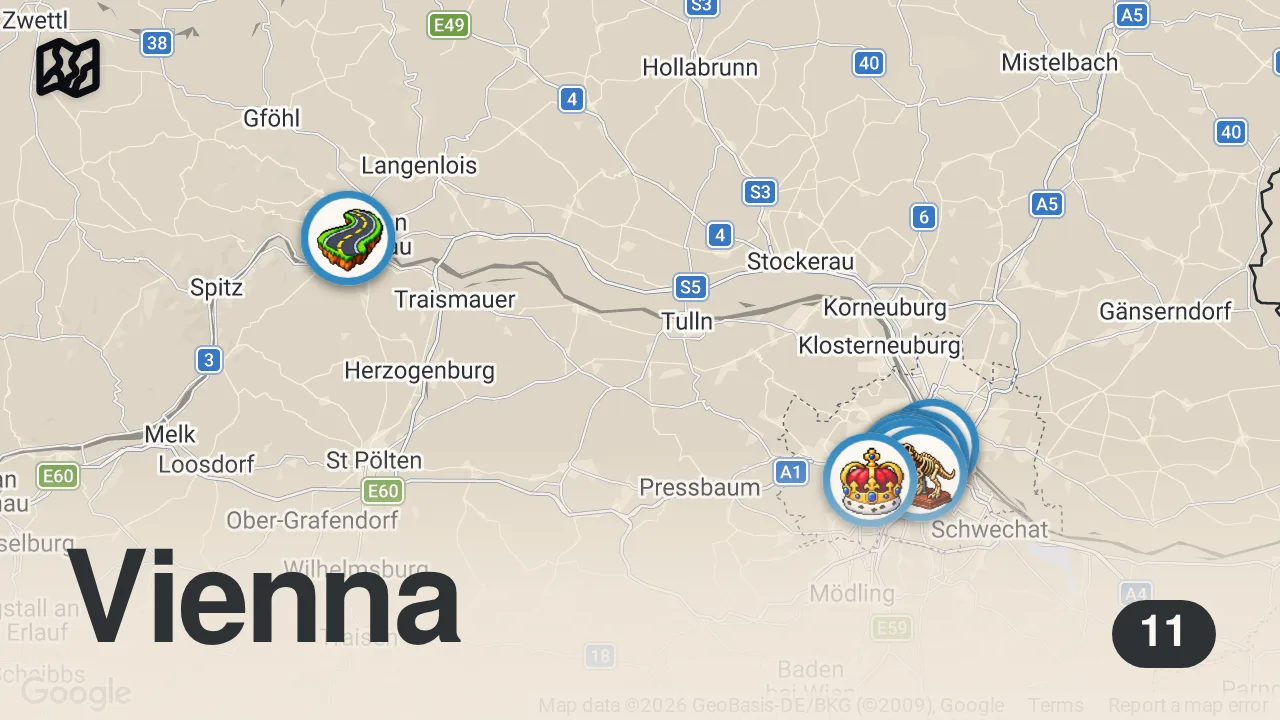
The 11 spots

Vienna State Opera
Opernring 2, 1010 Wien, Austria

MuseumsQuartier Wien
1070 Vienna, Austria

Hofburg
1010 Vienna, Austria

Kunsthistorisches Museum Wien
Maria-Theresien-Platz, 1010 Wien, Austria

Ringstraße
Ringstraße, 3500 Krems an der Donau, Austria
Viennese Giant Ferris Wheel
Gaudeegasse 1, 1020 Wien, Austria

Center Wien Mitte
Landstraßer Hauptstraße 2a/2b, 1030 Wien, Austria
Belvedere Palace
1030 Vienna, Austria
Show all 11 spots
Naschmarkt
Naschmarkt, Wien, Austria

Schönbrunn Palace
Schönbrunner Schloßstraße 47, 1130 Wien, Austria
St. Stephen's Cathedral
Stephansplatz 3, 1010 Wien, Austria
From the video
 10 Vienna Must See Sights - by Viennese Local Guide Grete - Vienna travel guide · Grete the Austrian Guide - Grete Walz
Grete the Austrian Guide - Grete Walz emphasizes that St. Stephen's Cathedral is the absolute must-see destination due to its spiritual atmosphere and intricate architectural details. She also highlights the Museum of Fine Art for its unique golden table automats and the stunning views of the city center from the 65-meter high giant Ferris wheel.
Researched by Varedelo
Planning notes for Innere Stadt
 Must-try foods in Innere Stadt
- Wiener SchnitzelThe quintessential Viennese dish, a thin, breaded, and pan-fried veal cutlet. In Innere Stadt, the gold standard is found at Figlmüller (famous for its 'larger than the plate' version) or Meissl & Schadn, where it is often fried in clarified butter and served with a side of classic Austrian potato salad with pumpkin seed oil.
- TafelspitzA refined dish of boiled beef or veal in a rich vegetable broth, historically a favorite of Emperor Franz Joseph I. It is traditionally served in several courses: first the broth, then the marrow on toasted bread, and finally the beef with apple-horseradish, chive sauce.
- SachertorteVienna's most famous cake, consisting of a dense chocolate sponge with a thin layer of apricot jam, coated in dark chocolate icing. The legendary rivalry between Café Sacher and Demel in the First District remains a major draw; locals often prefer the slightly less crowded but equally historic atmosphere of Café Landtmann.
- KaiserschmarrnA fluffy, shredded pancake dessert lightly caramelized and served with 'Zwetschkenröster' (plum compote). While found everywhere, the 'show-cooking' counter at Demel offers an interesting look at the preparation of this imperial treat, which has seen a massive resurgence in popularity as a trendy comfort food for 2026.
- Viennese Snails (Wiener Schnecken)A historic delicacy dating back to the Middle Ages that has seen a major trendy revival. Now featured at high-end spots like 'das weindl' or 'das weinberg' near the Ringstraße, they are often served gratinéed with herb butter or as tapas-style bites, highlighting Vienna's 'city-farm' movement.
- ApfelstrudelTraditional Viennese apple strudel features paper-thin pastry (strudelteig) filled with tart apples, raisins, and cinnamon-sugar breadcrumbs. In the 1st District, the historical atmosphere of Café Central or Café Diglas provides the perfect backdrop for this classic, often served with a warm vanilla sauce.
Trip guide
- About Innere StadtInnere Stadt is the first municipal district of Vienna and serves as its historical center. Enclosed by the Ringstrasse boulevard—a circular road constructed in the mid-19th century following the demolition of the city’s medieval walls—the area is a UNESCO World Heritage site.
- When to goThe best months to visit Vienna’s Innere Stadt are May, June, September, and October, which offer mild temperatures (12°C–22°C) and blooming or golden scenery ideal for walking the historic district. While the summer months (July–August) provide the warmest weather, they also bring peak crowds and higher prices.
- Getting around Innere Stadt
- Vienna U-Bahn (Subway) The most efficient way to reach the district is via lines U1, U2, U3, or U4. Key central hubs include Stephansplatz and Karlsplatz, which provide direct access to the heart of the historic center.
- Vienna Ring Tram Tram lines 1, 2, 71, and D circle the perimeter of the Innere Stadt along the Ringstrasse. This provides a scenic and convenient way to navigate the outer boundary of the district and access major landmarks.
- Walking (Pedestrian Zones) The Innere Stadt is largely pedestrianized and compact, making walking the best way to explore. Most major sites, such as St. Stephen's Cathedral and the Hofburg, are within a 10-15 minute walk of each other.
- Local tips
- Always stand on the right side of escalators in U-Bahn stations and walk on the left to accommodate commuters in a rush.
- Greet shopkeepers and waitstaff with a formal 'Grüß Gott' upon entry and say 'Auf Wiedersehen' when leaving to follow local social etiquette.
- When dining, indicate you are ready to pay by making eye contact and saying 'Zahlen, bitte,' then round up the bill by 5-10% as a tip.
- What’s new in Innere Stadt
- Vienna Bites (2026): A city-wide culinary theme year highlighting 'Cuisine, Culture, Character' with new plant-based pop-ups and traditional bistro reloads in the 1st District.
- True Colors Exhibition: A major viral showcase at the Wien Museum (opening October 2026) exploring four centuries of Viennese fashion history.
 Vienna Tourist BoardVienna Tourist BoardThe official online travel guide for Vienna, providing information on attractions, events, and services for the city, including the historic Innere Stadt district.
Planning questions
What are the best spots in Wien from this video?
This guide maps all 11 spots featured in the video, with names, addresses, and neighborhoods, so you can plan your trip to Wien.
Can I save these spots to use on my trip?
Yes. Open the map in Varedelo to save every spot, get directions, and revisit the guide from your phone while you travel.