Video mapValencia3 spots
Mark Wiens in Valencia: 3 Spots From the Video
3 spots in Valencia, mapped from Authentic Spanish Paella!! HUGE PAELLA + Market Food Tour in Valencia, Spain! by Mark Wiens.
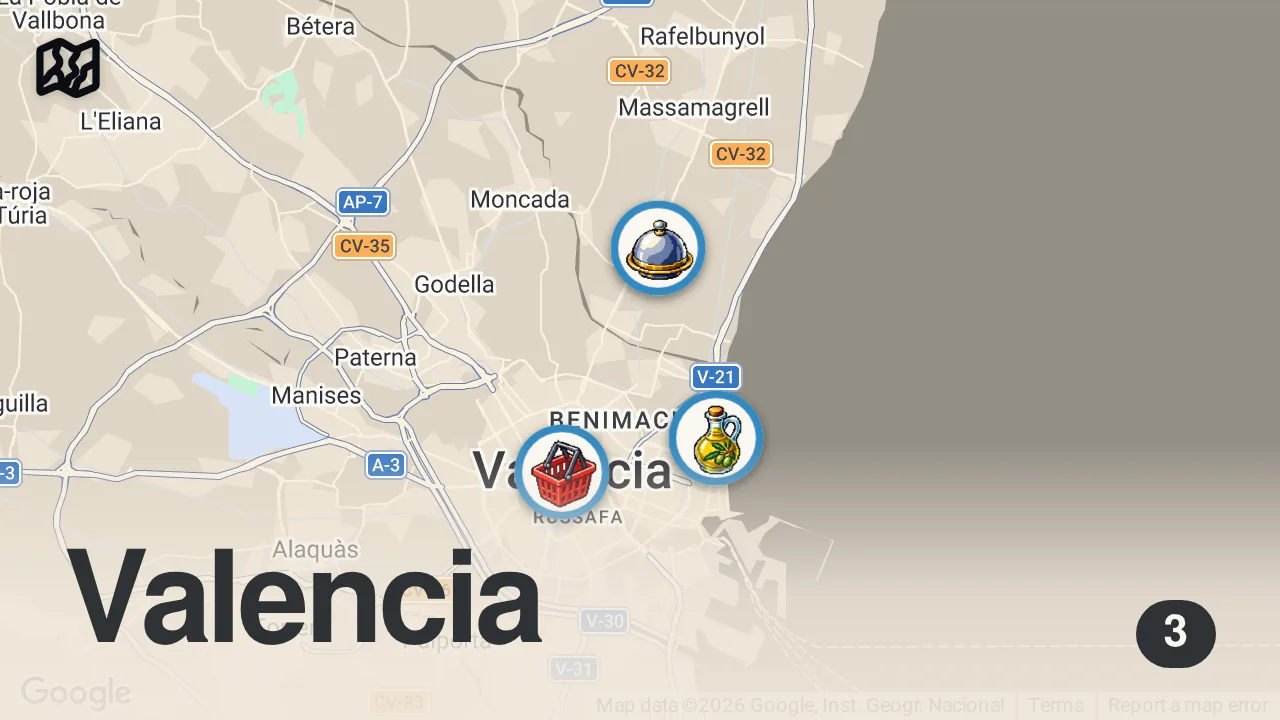
The 3 spots
Casa Carmela
- Casa CarmelaKnown for: Paella Valenciana. Mentioned as a must-try spot in top foods.
Try: Paella Valenciana
C/ d'Isabel de Villena, 155, Poblados Marítimos, 46011 València, Valencia, Spain

Barraca Toni Montoliu
Partida de l'Ermita, Polígon, 1, Parcel·la 25, 46133, Valencia, Spain

Central Market of Valencia
C/ de Palafox, 13, Ciutat Vella, 46001 València, Valencia, Spain
From the video
 Authentic Spanish Paella!! HUGE PAELLA + Market Food Tour in Valencia, Spain! · Mark Wiens
Mark Wiens was captivated by the beauty of Valencia's Central Market and the deep-rooted traditions surrounding authentic paella. He particularly enjoyed the farm-to-table experience at Tony Montoliu's estate, where he harvested fresh ingredients and learned about the dish's historical connection to the local land and rice fields.
Food from the video
 Orchata (tigernut milk)
 Farton (sweet bread)
 Raw Garrofó (butter beans)
 Gilda (olive, pepper, and anchovy skewer)
 Salt-cured mullet eggs
 Pickled beans
 Fresh olives
 Tortilla de patatas sandwich
Researched by Varedelo
Planning notes for Valencia
 Must-try foods in Valencia
- Paella ValencianaThe city's most iconic dish, traditionally prepared with short-grain rice, chicken, rabbit, green beans (bajoqueta), and large white beans (garrofó). For an authentic experience in 2026.
- All i PebreA traditional fisherman's stew originating from the El Palmar district. It features fresh eels from the Albufera lake and potatoes, simmered in a rich, spicy sauce made from garlic, paprika (pebre), and chili. It remains a staple for locals seeking a deep, earthy taste of the region's wetlands.
- Horchata de Chufa with FartonsA refreshing, milky drink made from tiger nuts (chufas) grown in the nearby Alboraya fields. In 2026, artisanal horchaterías like Santa Catalina or Daniel continue to serve it with 'fartons'—long, spongy, glazed pastries designed specifically for dipping into the cold drink.
- EsgarraetA popular cold tapa consisting of grilled red peppers 'torn' into strips (hence the name) and mixed with flakes of salted cod (bacalao), garlic, and high-quality extra virgin olive oil. It is a masterclass in Mediterranean simplicity, often served with crusty bread to soak up the flavorful oil.
- FideuàOften described as the seafood cousin of paella, this dish replaces rice with short, hollow noodles. It is cooked in a wide flat pan with a concentrated fish rock-broth, squid, and prawns. It is trending in 2026 at upscale beachside spots like Casa Patacona, where it is almost always served with a side of pungent handmade allioli.
- Buñuelos de CalabazaPumpkin fritters that are a staple during the Las Fallas festival but now increasingly available year-round due to high demand. These deep-fried, airy dough rings are flavored with roasted pumpkin and traditionally dipped in thick, hot chocolate for a decadent snack.
Trip guide
- About ValenciaThe Municipality of Valencia, located on the eastern coast of the Iberian Peninsula, was founded as a Roman colony in 138 BC under the name Valentia Edetanorum. The city's history is defined by successive periods of Roman, Visigothic, and Islamic rule before its conquest by James I of Aragon in 1238.
- When to goThe best time to visit Valencia is during the shoulder seasons of April to June and September to October, when the Mediterranean weather is mild and sunny, perfect for exploring the historic center or relaxing at outdoor cafes without the intense summer heat. While July and August mark the peak tourist season with high temperatures and crowded beaches, the city is most vibrant in mid-March for the world-famous Las Fallas festival.
- Getting around Valencia
- Metrovalencia (Metro and Tram) An extensive network of 10 lines connecting the airport (Lines 3 and 5), city center (Xàtiva and Colón stations), and beaches (Lines 4, 6, and 8). It is a fast, air-conditioned way to travel between the city and suburbs.
- EMT Valencia (Urban Buses) Over 60 bus routes provide a fine grid across the city, including circular routes (C1, C2, C3) and night services (CorreNIT). Red buses cover the city center.
- Renfe Train (AVE and Cercanías) High-speed AVE trains connect Valencia to Madrid and Seville via Joaquín Sorolla station.
- Local tips
- Reuse your rechargeable metro card for subsequent trips to save on the initial one-euro card issuance fee.
- Plan to eat paella exclusively for lunch, as locals consider it too heavy for dinner and many authentic restaurants only serve it midday.
- Always carry a physical ID or a clear photocopy, as Spanish law requires everyone to be able to identify themselves to authorities upon request.
- What’s new in Valencia
- The opening of the Sorolla Museum in the Palacio de las Comunicaciones, featuring over 200 works from the Hispanic Society of America.
- Viral 'Egg Drop' brioche sandwiches and specialty bagels at the newly trending FOUR C&B (Coffee & Bistro).
 Visit BarcelonaVisit BarcelonaThe official tourism website of Barcelona, providing comprehensive visitor information for the Ciutat Vella district and the entire city.
Planning questions
Where did Mark Wiens eat in Valencia?
This guide maps all 3 spots featured in the video, with names, addresses, and neighborhoods, so you can plan where to eat in Valencia.
What are the must-try foods in Valencia?
Creator picks from the video include Orchata (tigernut milk), Farton (sweet bread), Raw Garrofó (butter beans), Gilda (olive, pepper, and anchovy skewer). Open the map in Varedelo to see which spot each one is at.
Can I save these spots to use on my trip?
Yes. Open the map in Varedelo to save every spot, get directions, and revisit the guide from your phone while you travel.