
Travel video guide
Things to Do in Nara: All 4 Spots + Addresses
This guide turns 【渡航自粛】それでも日本に来る理由は?中国人観光客に直撃してみた from TOMO’S TRAVEL / トモズトラベル into a practical travel map with 4 saved spots around Nara, Chuo City, and Osaka. The mapped places include an area marker, a buddhist temple, a department store, and a park. Use it to understand the places and trip context before saving the map in Varedelo.
What the creator captured
TOMO’S TRAVEL / トモズトラベル visited Nara Park to investigate how Chinese tourists are reacting to their government's call to restrict travel to Japan. The creator discovered that many travelers prioritize cultural exchange and personal experiences over political tensions, with some visitors even having traveled to Japan over twenty times. Ultimately, the video highlights the resilience of grassroots tourism and its critical role in supporting the Japanese economy despite diplomatic friction.
What this map is good for
- Planning a buddhist temple stop or short itinerary in Nara.
- Seeing where the mapped places sit together before choosing what to visit first.
- Saving 4 mapped spots into Varedelo so the list stays usable on the ground.
- Using the original video as context, then turning it into a clean place-by-place map.
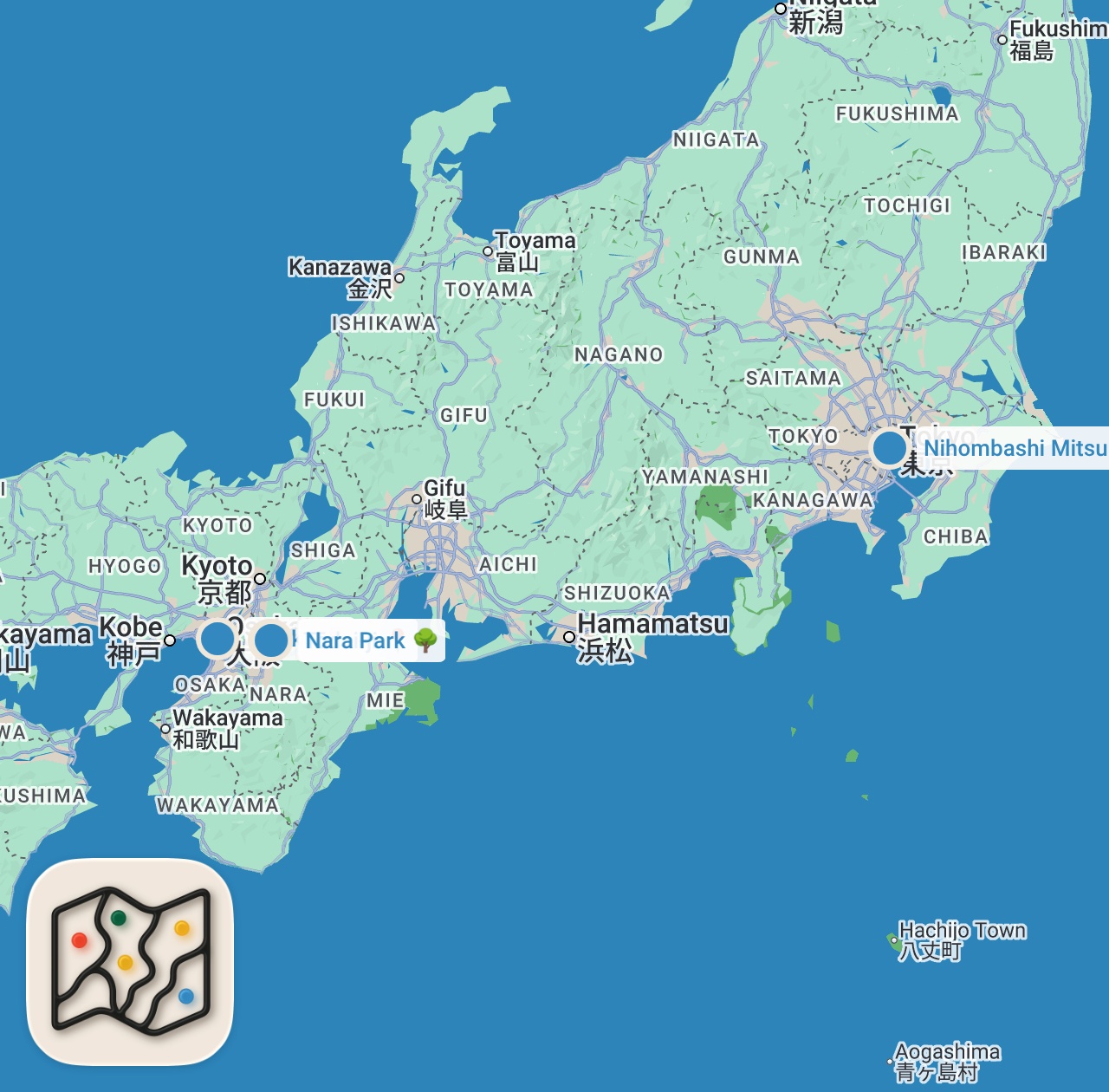
Featured spots on this map
- Tōdai-ji
Buddhist Temple in 406-1 Zōshichō, Nara, 630-8587, Japan, Zōshichō, Nara, Japan
Hours: Hours available - Osaka
Area marker in Osaka, Japan, Osaka, Japan - Nihombashi Mitsukoshi Main Store
Department Store in 1-chōme-4-1 Nihonbashimuromachi, Chuo City, Tokyo 103-8001, Japan, 4, Chuo City, Tokyo, Japan
Hours: Hours available - Nara Park
Park in Nara, Japan, Nara, Japan
Hours: Hours available
Experiences captured
- Visited Nara Park to interview Chinese tourists
- Observed deer interacting with visitors
- Interviewed first-time and repeat travelers from China
- Discussed political tensions and travel restrictions with tourists
- Analyzed the historical connection between Nara and China
- Explored the impact of the weak yen on tourism
- Investigated potential economic losses for Japanese retail and stocks
- Gathered opinions on improving Japan-China grassroots relations
Planning notes for Tokyo
Tokyo, the capital of Japan, originated as a small fishing village named Edo before becoming the seat of the Tokugawa shogunate in 1603. The city was renamed Tokyo in 1868 when the imperial capital moved from Kyoto. Its historical heritage is preserved in sites such as Senso-ji, a Buddhist temple founded in 645, and the Imperial Palace, which occupies the former site of Edo Castle. The architectural landscape consists of traditional wooden structures in neighborhoods like Yanaka and Shitamachi.
Must-try foods nearby
- Edomae Sushi
The quintessential Tokyo experience, featuring vinegar-seasoned rice topped with fresh seafood from Tokyo Bay. - Monjayaki
Tokyo's answer to okonomiyaki, this savory pancake has a more liquid consistency and is cooked on a flat grill until it develops a crispy bottom. - Kaisen Donburi (Tsujihan-style)
A decadent seafood rice bowl that has become a viral sensation. Unlike traditional sashimi bowls, this involves a mountain of chopped seafood including tuna, crab, and salmon roe. - Wagyu Yakiniku
Grilled Japanese beef is a Tokyo must, but the 2026 scene emphasizes 'affordable luxury. - Sago Mango Pomelo Desserts
A major 2026 food trend in Tokyo is the rise of 'Sago'—tiny, chewy pearls derived from palm starch.
When to go: The best times to visit Tokyo are spring (late March to April) for cherry blossoms and autumn (October to November) for vibrant foliage and mild, pleasant temperatures. Summer is often oppressively hot and humid with a rainy season in June.
Local tips
- Purchase a digital Suica or Pasmo card on your phone for seamless payment on all trains, buses, and at most convenience stores.
- Stand on the left side of escalators and keep the right side clear for people who are walking or in a hurry.
- Carry a small bag for your trash as public garbage cans are rare, and it is considered polite to take your litter home.
- Refrain from talking on your mobile phone or speaking loudly while riding public transportation to maintain a quiet environment.
What travelers are noticing
- PokéPark Kanto: The world's first permanent outdoor Pokémon theme park opening in February 2026 at Yomiuriland.
- Takanawa Gateway City: A futuristic 'experimental' district grand opening in March 2026, featuring the Kengo Kuma-designed MoN Takanawa museum.
- Edo-Tokyo Museum Reopening: The iconic cultural landmark returns in March 2026 after a four-year renovation with new Meiji-era street recreations.
Planning questions
What are the best spots in Nara from this video?
This guide maps all 4 spots featured in the video, with names, addresses, and neighborhoods, so you can plan your trip to Nara.
Can I save these spots to use on my trip?
Yes. Open the map in Varedelo to save every spot, get directions, and revisit the guide from your phone while you travel.
Use it on your trip
Save this travel map before you go
Keep the mapped spots, creator context, food notes, and planning details together. Varedelo turns the page into a phone-friendly map you can revisit when you are choosing where to go.